Showing posts with label Discussion Topics. Show all posts

Monday, July 30, 2012

[Replicable Practices] Flickr . . . Flickr . . . Flickr Fun

Signing up for a free Flickr account was simple. The wonderful thing about the signup process was that any user has three options (the more options the better). Each user can sign up for a new account (associated with Yahoo), use an existing Yahoo ID or they can use an existing Facebook ID or Google ID. I already had a Yahoo Account (Renaissance Professor) therefore I did not have to memorize another signup name and password for a site that I may or may not use.

I am finding myself daydreaming about other nostalgic places and therefore decided to revisit a couple of childhood communities. I took a couple of snapshots with my iPhone 4s (enabled Geo-tagging), signed up for a Flickr Account, uploaded the photos, changed their privacy settings to public, reviewed the license agreement and tagged. I then decided to map the photos on the Flickr map. The process was easy and I can see how this tool can be addicting.

Here are the set of three photos that also mark earlier milestones in my life:

Avon Ave
Avon Ave by Renaissance Professor, on Flickr

Keele Subway Station Outdoor Waiting Platform
Keele Subway Station Outdoor Waiting Platform by Renaissance Professor, on Flickr

Keele Subway Station
Keele Subway Station by Renaissance Professor, on Flickr

These spots are very important to me because this is where I grew up. What and where would I explore today? I cannot count the number of almost falls I had running down these steps at the Keele Subway Station. Never wanting to miss my bus as I heard the rumble of its engine as the bus pulled into the bay.

My photo experience and using Flickr was a positive one. Uploading pictures was easy. It took a while to get all the settings in the Flickr account just right but once they were set they became the default for every other photo I uploaded. I really liked placing the photos on the Flickr map. Enabling the Geo-Tagging feature on the phone is a great feature.

Teachers can use Flickr and associated tools in many ways. Consider an interactive and visual story line for writing assignments, historical associations to modern landmarks or photo journalism to virtually any topic.

Saturday, May 5, 2012

[Replicable Practices] Discover Flickr


Before creating a free Flickr account I decided to explore The Tour and read the FAQ. I rummaged, searched, explored and discovered and interesting image that I share with you below. I suggest you do the same.

Angele Menard
Angele Menard by H.A.T. Photography, on Flickr
This old barn can be found at the Adamson Estate, which forms the eastern boundary of Port Credit, Ontario. Why is this old barn significant? The barn represents an important milestone in my life, awhile back I also had my photograph taken at that exact spot.
More on Flickr in my next blog post.

Thursday, April 5, 2012

[Replicable Practices] Educational Merits: Blogging in Education

Grab yourself a blog in 3 steps

What is a blog?

Comments:

I share with you a Google Scholarly Search using the term: Blogging in education. I particularly enjoy:
Downes, S. (2004, September). Educational blogging. EDUCAUSE Review, 39(5), 14-26. Retrieved from http://www.educause.edu/EDUCAUSE Review/EDUCAUSEReviewMagazineVolume39/EducationalBlogging/157920
Taken from the Educase Website:
Stephen Downes (http://www.downes.ca) is a Senior Researcher with the E-Learning Research Group, National Research Council Canada, Moncton, New Brunswick. Comments on this article can be sent to the author at stephen@downes.ca.
My Blogs
  
WordPress
Blogger
Replicable Practices Replicable Practices
My Philosophy My Philosophy

Please look forward to another [Replicable Practices] post in which I explore Tumblr.

Monday, December 26, 2011

[Replicable Practices] CBC Learning and Blog

The Canadian Broadcasting Centre better known as the CBC is Canada's national public broadcaster. For years I have been watching their top quality TV programs and special documentaries. More often then not I have found inspiration relating their programming content within the context of my lessons. By doing so I have developed interesting lessons and lesson extensions and have hopefully sparked a curiosity within the students. I share with you a CBC Learning Blog that hopefully you can use the ideas found within to develop your own replicable practices. Thank you CBC.

New Link: CBC Learning

Saturday, November 26, 2011

[Replicable Practices] Sir Ken Robinson - RSA Animate: Changing education paradigms

You Tube IconRobinson, S. K. (Lecturer) (2010). Changing education paradigms [Web]. Retrieved from http://www.youtube.com/watch?feature=player_embedded&v=zDZFcDGpL4U


Comments:

I had to watch the video a few times before I began to understand the concepts that Sir Ken Robinson was referring too. When I think of education reform I think of it in terms of Newton's Cradle.

Some external catalyst or motivation begins the motion to reform education. In this case the catalyst for educational reform is the preparation for the changing economy in the 21st century and the the maintenance of cultural identity. Both in my mind very valid starting points to trigger reform. Using Newton's Cradle then the ball represents the idea of an education reform. Once the ball or reform is released it goes through a series of cultural and societal institutions.

Each institution takes a piece of that reform, absorbs it, and in turn (hopefully??) uses it to change educational practices. However, if with each transfer of idea the only thing that takes place is the absorption the reform eventually stops. In other words the pendulum stops swinging since all energy has been used. What needs to happen in order to keep the pendulum swinging is a reinvention and application of a particular educational reform so that new reforms can contribute back and redistribute ideas (energy) back to the institutions thus maintaining momentum.

Educators need to embrace the new reforms which in many cases do not come from the professionals or other institutions but from the learners themselves, the students. I like to think of myself as the student rather than the teacher.

Friday, November 25, 2011

[Replicable Practices] Lifelong Learning


Young, S. H. (2011, July 31). 15 steps to cultivate lifelong learning. Retrieved from http://www.lifehack.org/articles/lifestyle/15-steps-to-cultivate-lifelong-learning.html
Comments:

After reading the article I could not help thinking back to the summers I had spent with my grandfather and grandmother. There was never a summer day that went by where my grandfather did not repeat his personal motto to me. He would say:
Michael take time to learn anything and everything you can. Learn a skill no matter how big or how small, one day you will be thankful that you learned that skill, it will serve you well. Learn it, set it aside but do not forget it.  (Ernesto Salerno)
The 15 steps to cultivate lifelong learning speaks to me on a very personal level. Step 2 "keep a to learn list" and step 3 "get more intellectual friends" are two steps that I am very thoughtful in carrying out. It would be a challenge to have everything on your to learn list crossed off since the list is continually growing however it keeps the learning process moving forward, creating many sub or side lists to work from. Surrounding myself with  intellectual friends can be intimidating and uncomfortable but it is within that uncomfortable feeling that learning takes place.  My career as a teacher has certainly helped me carry out both steps.

Friday, July 1, 2011

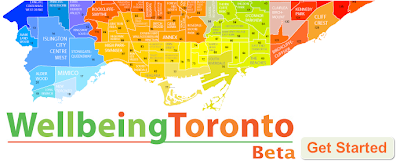
[Replicable Practices] Wellbeing Toronto

A new site was launched about the City of Toronto. A valuable tool for several reasons. It helps satisfy the curiosity that Torontonians have about where they live. Comparisons can be made between neighbourhoods to help people make decisions. Students can use the site through a number of school subjects such as careers, civics, geography, urban planning, business, environmental studies, math etc. Teachers can use another visual and technological means to give students other perspectives.

Wellbeing Toronto

Copied directly from Wellbeing Toronto:

Wellbeing Toronto is a new web-based measurement and visualization tool that helps evaluate community wellbeing across the city's 140 neighbourhoods. Using geographic information software, Wellbeing Toronto allows you to select, combine and weight the significance of a number of indicators that monitor neighbourhood wellness. The results appear instantly on easy to read maps, tables and graphs. This free tool supports decision making and seeks to engage citizens and businesses in understanding the challenges and opportunities of creating and maintaining healthy neighbourhoods. You can also find detailed demographic information about each neighbourhood.

Thursday, June 2, 2011

[Replicable Practices] Please Teacher Can We Watch A Video? Wingclips.com

Conversation Sparkler
Ask a student what they learned in school and almost all of the time their memory becomes foggy, hazy, blurred and even forgetful. Their replies are short, elusive and dodgy. A word stumbles out of their mouth..."nothing."

Ask the same student if they can describe their favorite movie or to recite their favorite movie quote and magically they are transformed into giving an accurate, detailed and succinct reply.

Whenever possible I try to incorporate video clips into my lessons. Very popular in lesson introductions but also useful to reinforce concepts or to be used as conversation sparklers.

WingClips.com
 WingClips.com is a website that I often refer to when I need "movie clips that illustrate and inspire." The website is subscription based (there is a free sign up with limitations). You can search the video clips library through a search box or you can select clips based on movie title, scripture (requires registration), category or theme.

Saturday, May 21, 2011

[Replicable Practices] Hey You, Opportunity is Knocking so GetInvolved.ca

What do you need to graduate from an Ontario High School?

In addition to the 18 compulsory, students must complete the following: (PDF)
  • 12 optional credits
  • 40 hours of community involvement activities
  • the provincial literacy requirement
Where can I find opportunities to complete the 40 hours of community involvement activities?
  
Getinvolved.ca is a companion website linked to a TVO television series. On TVO, Get Involved is 25 documentary shorts celebrating people from 7-70 who are making a difference in their schools, in their community and through their work. They are stories of inspiration. The website was created was created to transform that inspiration into action.


Hey You, Opportunity is Knocking so GetInvolved.ca

Sunday, April 17, 2011

[Replicable Practices] The Costly Comma - Comma quirk irks Rogers

I really enjoy sharing this article with my students. I usually do so right before we begin a section on grammar or whenever students ask me if spelling or grammar mistakes count as deducted marks on their assignments.


Comma quirk irks Rogers

GRANT ROBERTSON
From Monday's Globe and Mail
Published Sunday, Aug. 06, 2006 11:30PM EDT
Last updated Monday, Apr. 06, 2009 10:26PM EDT
It could be the most costly piece of punctuation in Canada. A grammatical blunder may force Rogers Communications Inc. to pay an extra $2.13-million to use utility poles in the Maritimes after the placement of a comma in a contract permitted the deal's cancellation. [Full Article]

Thursday, December 16, 2010

[Replicable Practices] My Credo

eHow.com
I always like having the students develop their own personal credo. I like this activity for several reasons. Their credo helps me get to know the students better. Sometimes they provide information that they would not normally share with the teacher. In addition they sometimes also give me a glimpse into their aspirations or interests. I can then proceed and use that information to generate connections and as if not more importantly interest in the lessons. I really like giving the students the credo assignment after reading with them All I Really Need to Know I Learned in Kindergarten - By Robert Fulghum. I used How to Write a Credo By Rhomylly Forbes, an eHow Contributor.

Saturday, November 13, 2010

[Relicable Practices] The Devastaing Impact of Illiteracy: Lesra Martin

I was looking for a way to introduce reading strategies to my class and decided to browse the Ontario Secondary School Literacy Course (OSSLC) Profile for ideas when I came across Activity 1.4 - Introducing Reading Strategies (P 74). The activity is great. Even better is Lesra Martin. Lesra Martin is one of the resources listed for this activity.

Taking inspiration from Lesra Martin an excellent introduction to reading strategies can be developed. I especially enjoy reading with the students { Literacy }The Devastaing Impact of Illiteracy.

As a side interest we also discussed: { The Six Elements}

© 2010 Lazarus Communications Inc.

Monday, August 23, 2010

[Replicable Practices] All I Really Need to Know I Learned in Kindergarten - By Robert Fulghum

All I Really Need to Know I Learned in Kindergarten - By Robert Fulghum
Oh great...just fantastic...I should have paid more attention in Kindergarten! I encountered an excerpt from this book which I must have read at least 20 times already. I would like to share it with you. The excerpt is taken from Chapter 1 of the above book. The chapter is entitled "Credo".

Wednesday, June 16, 2010

[Replicable Practices] The power of an Apple iPhone and iPad to transform classrooms!

Apple iPad
For a long time whenever anyone mentioned an Apple computer I immediately thought of two things, graphic designers and classrooms. I suppose one reason is that Apple themselves marketed and aligned their products for a particular market.  Secondly it may have been the ease of use and availability that guided Apple computers into those segments.This thought had me thinking of the new Apples products such as the iPhone and iPad and how they could potentially transformation classrooms.

Google search "hand held classrooms" and at the time of this post about 2,950,000 results were found.

Here are a couple of PDF articles worth reading

YouTube search "hand held classrooms" and at the time of this post about 302 videos resulted plus 567 videos under the search "classrooms of the future" and "Ipad in the classroom".

This shift is going to happen.


Thursday, May 20, 2010

[Replicable Practices] Civics 101

The goal of Civics 101 is to teach people about how the Government of Ontario works. Through animated explainers, interactive features and interviews with political movers and shakers in the province many answers can be found. The majority of the information is presented in either a video format (perfect for an interactive whiteboard lesson) or a printable PDF format. Make sure to check out the online simulators and their new blog!
Civics 101
  • What is an electoral system?
  • What are Ontarians voting rights?
  • What is democracy and when did it begin?
  • How a law is made?
  • Who does what?
  • Rights and Responsibilities?
  • What is a budget all about?
  • What does First Past the Post mean?
  • What is a minority and a majority government?
  • What is a by-election?

Saturday, May 15, 2010

[Replicable Practices] Food Inc. Hungry For Change?

Hungry For Change?
Taken directly from the Official Food Inc. website:
In Food, Inc., filmmaker Robert Kenner lifts the veil on our nation's food industry, exposing the highly mechanized underbelly that has been hidden from the American consumer with the consent of our government's regulatory agencies, USDA and FDA. Our nation's food supply is now controlled by a handful of corporations that often put profit ahead of consumer health, the livelihood of the American farmer, the safety of workers and our own environment. We have bigger-breasted chickens, the perfect pork chop, herbicide-resistant soybean seeds, even tomatoes that won't go bad, but we also have new strains of E. coli—the harmful bacteria that causes illness for an estimated 73,000 Americans annually. We are riddled with widespread obesity, particularly among children, and an epidemic level of diabetes among adults.
Food Inc. is an excellent documentary that in full or in part should be shown in class. The accompanying educators manual can be used in part or as a complete package, however, I advise you take a look at it for yourself since there are many visuals and topics that might want to advise the student's parents the type of topic that you are going to present.

Food Inc. can easily lend itself nicely into various curriculum strands. I have used specific sections as a topic of discussion for a media awareness unit and critically thinking component.

The official Food Inc. website also has a trailer of the movie. You can find additional videos and discussion guides on the educational material page.

Tuesday, May 4, 2010

[Replicable Practices] Conversation "Video" Sparkers!


I really like the series of videos from the Shift Happens series. I find that these series of videos are great conversation sparkers. My experience in showing them is to create a spark that ignites a really great debate. I have watched the video and come up with a series of questions that I ask before the video and then again at the end. I use them to guide the discussion, however in some classes I find that the students initiate the conversation. I normally let them be and guide only if necessary. I find that showing them at the end of the year the students can take their prior knowledge, merge it with their new knowledge and altogether have a new schema around certain topics.

1.0 2.0 3.0 4.0